
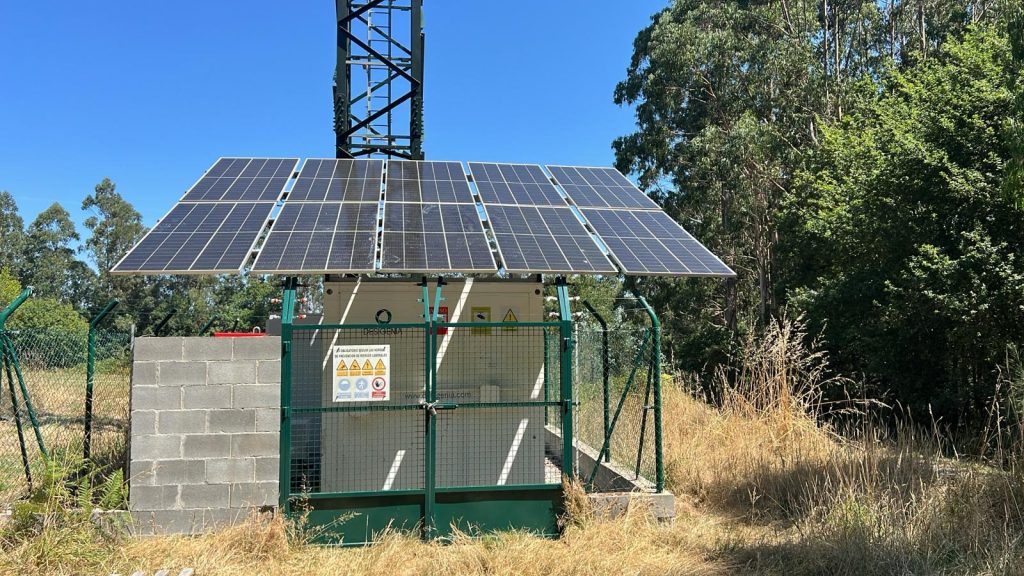
So far in 2025, Desigenia has installed new temporary hybrid systems at various telecommunications sites. In line with its commitment to sustainability, Desigenia is collaborating with the country’s leading operators to provide more sustainable and reliable energy solutions and ensure network access.
Currently, many isolated telecommunications base stations do not have access to the electricity grid. These stations are currently powered by generators that operate 24 hours a day, resulting in high energy costs and high levels of pollution and CO₂ emissions from the use of fossil fuels.

This results in high operating costs for telecommunications operators, as the generators require constant maintenance. There are also costs associated with power outages, failures, refuelling and possible vandalism in these remote locations.
Desigenia’s proposed solution is one of its flagship products: the Ecocube. This is a fully configurable, adaptable, containerised hybrid system with a self-supporting structure incorporating photovoltaic modules and batteries.
These containers are designed for quick transportation and installation at telecommunications base stations. They can be manufactured and integrated into our facilities, or assembled on-site, thanks to their removable and pre-assembled parts. All the necessary equipment is also integrated, either in cabins or in the container itself.
Each project is customised depending on the power requirements of each station and the energy demand of the site. The number of photovoltaic modules or batteries can be adapted, as can the power of the generator that functions as a backup in case the solar energy and energy stored in the batteries are insufficient.
A flexible and secure solution
Hybrid systems allow operators to select the optimal combination of energy sources for the site’s specific requirements.
By combining renewable energy sources, hybrid systems can improve energy security and reduce dependence on a single energy source.
Desigenia offers options including photovoltaics and wind turbines. There are also backup sources, such as gas and diesel generators, as well as hydrogen or methanol fuel cells.
Furthermore, the system comes with 24/7 monitoring to ensure operational continuity and optimise energy performance based on specific data.
A step towards the global expansion of hybrid energy
Desigenia is developing new projects and products related to solar photovoltaic energy and hybrid energy systems. To this end, we have a global network that already includes our successful branches in the Americas: Desigenia Mexico, Desigenia Chile and Desigenia Colombia, as well as our most recent addition, Desigenia Germany.
These offices bring us ever closer to the internationalisation of our hybrid energy systems and energy efficiency solutions.